Washington's Tent | Museum of the American Revolution
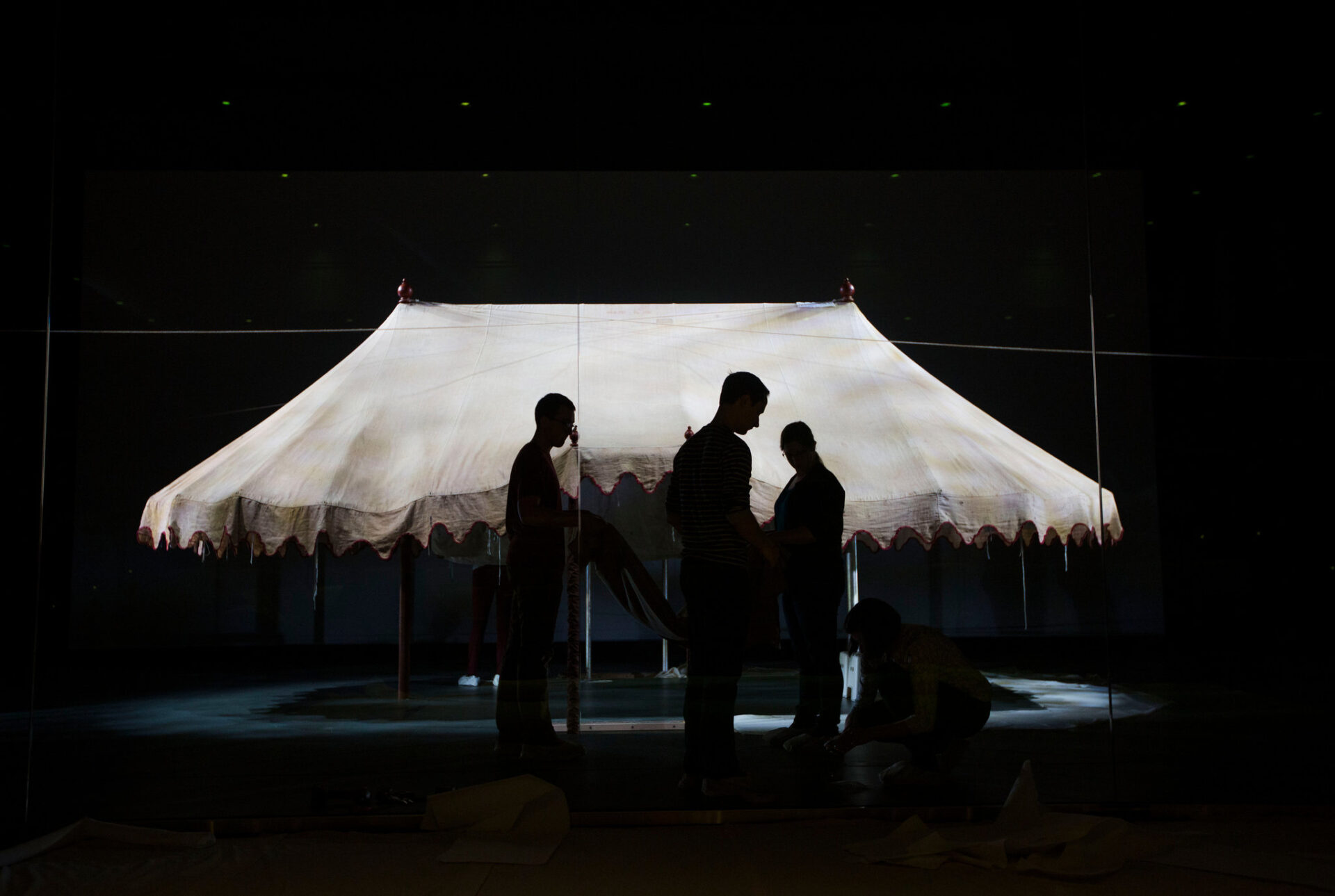
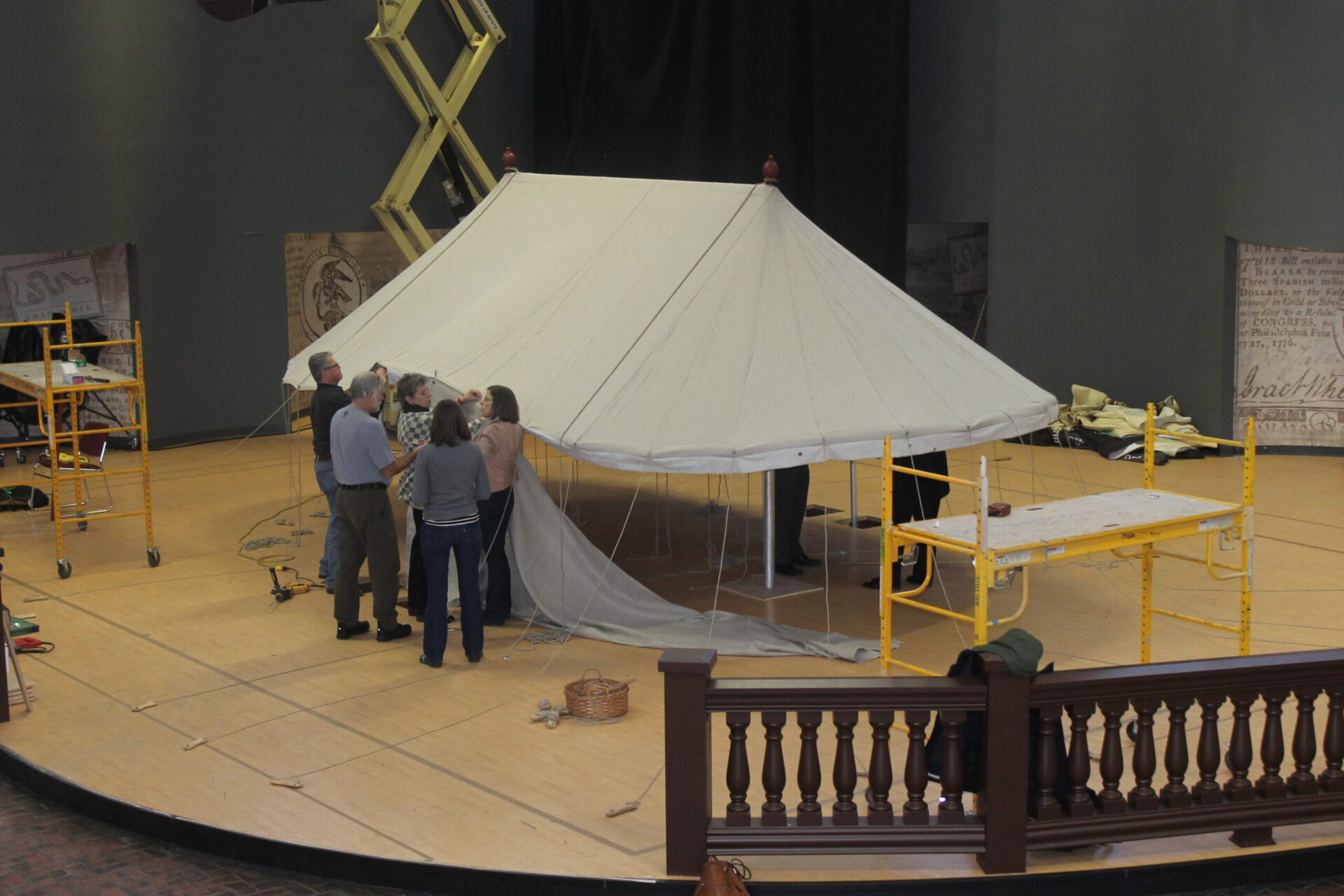
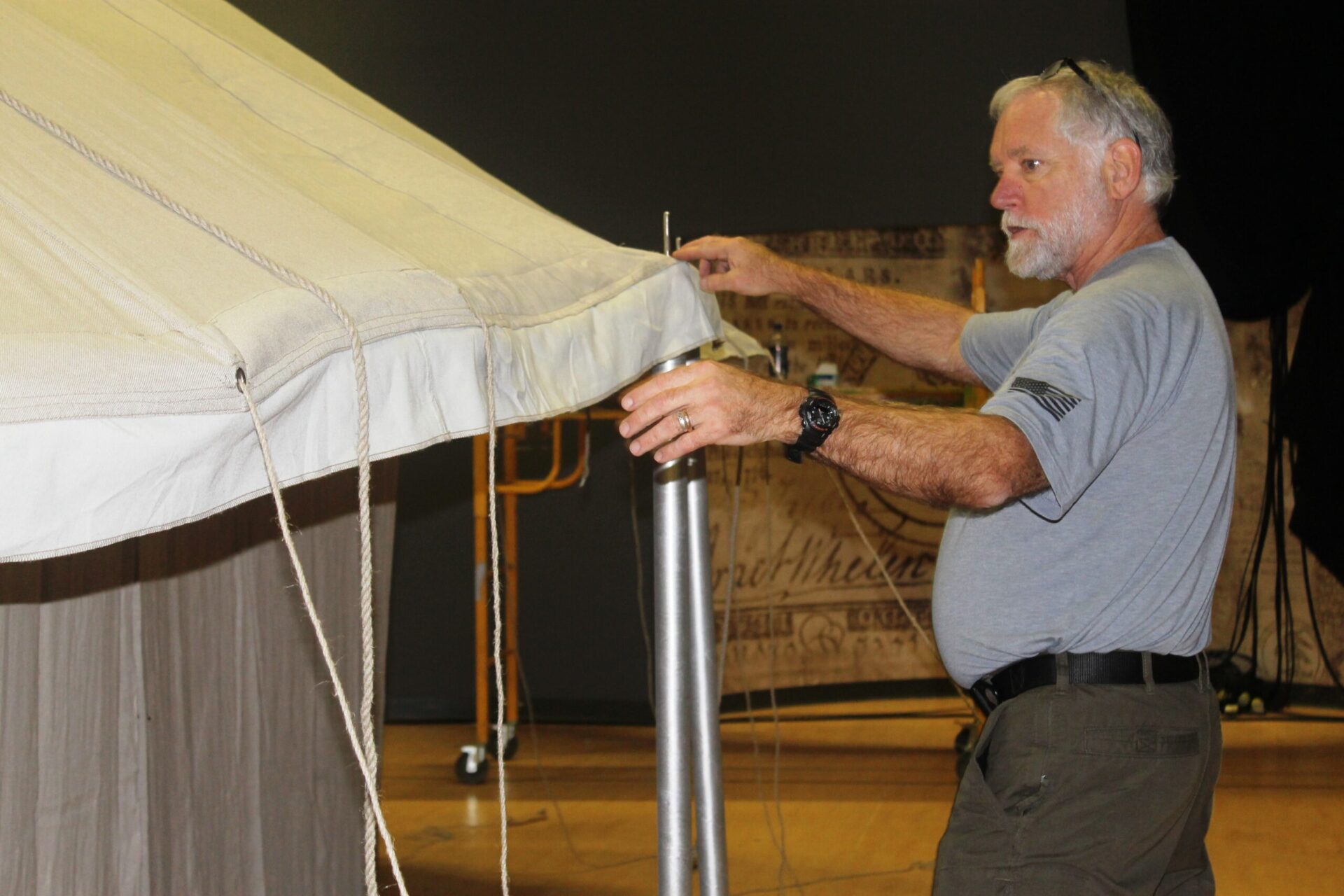
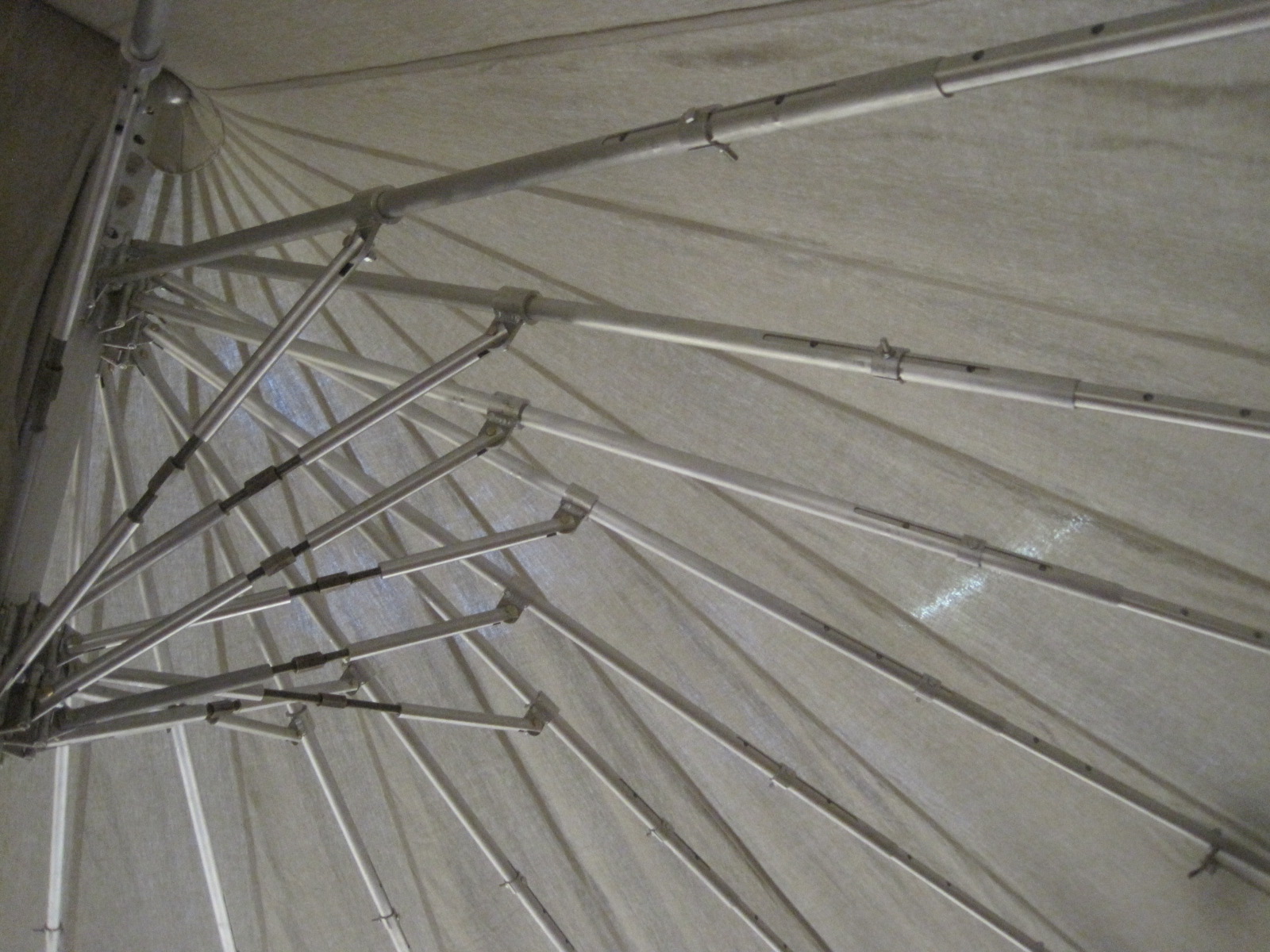
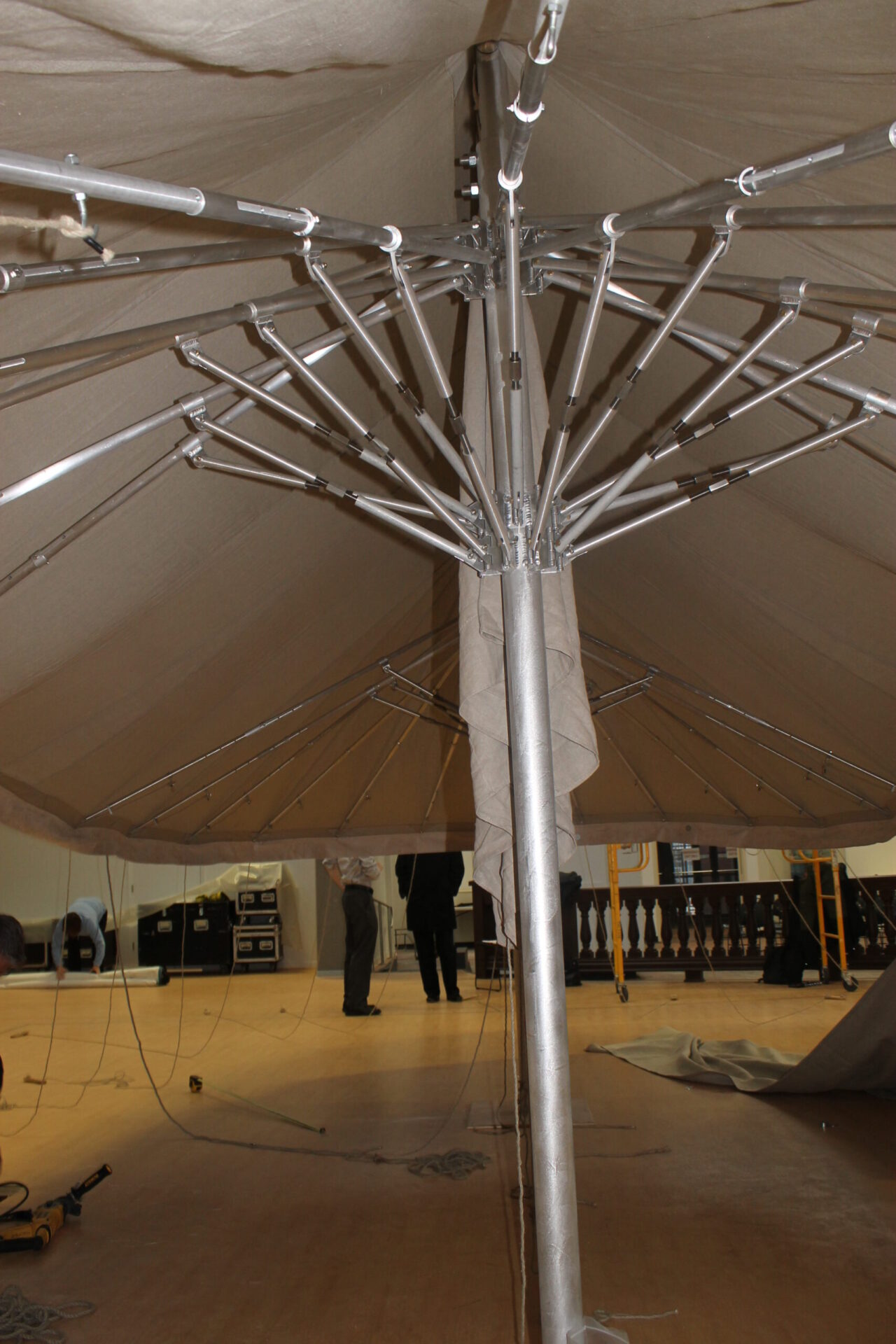
George Washington’s marquee war tent (c. 1777) is on the display at the Museum of the American Revolution, thanks to an innovative umbrella-like structure that supports the artifact without inducing stress in the delicate fabric. The 400-sf war tent, which served as Washington’s home and command center for eight years during the Revolutionary War, is one of the centerpiece exhibits in the forthcoming Museum of the American Revolution. Originally, the tent was erected with two main standards and encircling taut ropes through grommets to tension the tent’s roof membrane. Keast & Hood worked with a team of conservators, historians, and craftsmen to design an aluminum supporting structure for display of the artifact. The structure provides adjustability to account for uncertainties in the tent’s dimensions while allowing it to drape naturally. A canvas sub-tent membrane stretched over the structure supports the artifact. The umbrella structure is invisible to viewers so that the tent imitates its original shape. The ropes that originally tensioned the tent are now purely aesthetic and representative of the earlier form. The replica tent (shown right) was sewn by craftspeople from Colonial Williamsburg and was utilized to test the tent structure. The Museum of the American Revolution opened in 2017 at Third and Chestnut Streets in Philadelphia. Keast & Hood is also the structural engineer of record for the new museum.
- Principal
- Dean Doukakis, PE
- Project Team
- John R. Davis, PE | Alexander J. Stadel, PE
- Client
- American Revolution Center
- Location
- Philadelphia, PA
- Project Type
- Culture and Libraries
- Project Scope
- Renovation
- Status
- Complete
- Year Completed
- 2013 - Frame, 2017 - Full Installation